Flying with a life raft is not as simple as placing it inside checked baggage. The answer to “What are the legal requirements for carrying a life raft on a flight?” depends on its inflation system, compressed-gas cylinder, battery, packaging, and route. A raft may be accepted only when the airline and relevant aviation authority approve its components.
The International Air Transport Association’s Dangerous Goods Regulations remain a key industry reference. They address compressed gases, safety equipment, and operator-specific acceptance procedures. The FAA PackSafe program also warns that life rafts can contain CO₂ cylinders, which may require declaration and quantity controls. IATA reported approximately 40.6 million commercial flights in 2024, showing why standardized handling rules matter. One overlooked cylinder can delay check-in.
Aviation safety specialist and former FAA administrator Mike Whitaker has repeatedly emphasized, “Safety is our North Star.” That principle applies here, although it does not replace a carrier’s written approval. Travelers should provide the raft’s product label, Safety Data Sheet, cylinder details, and manufacturer instructions before travel. Contact the airline’s dangerous-goods desk, not only a general booking agent. Check both departure and arrival rules. Some requirements remain unclear across jurisdictions. This guide examines current airline procedures, international standards, and practical documentation for 2026. It also identifies common assumptions that deserve closer review, especially when a raft contains an automatic inflation device or removable gas cylinder.
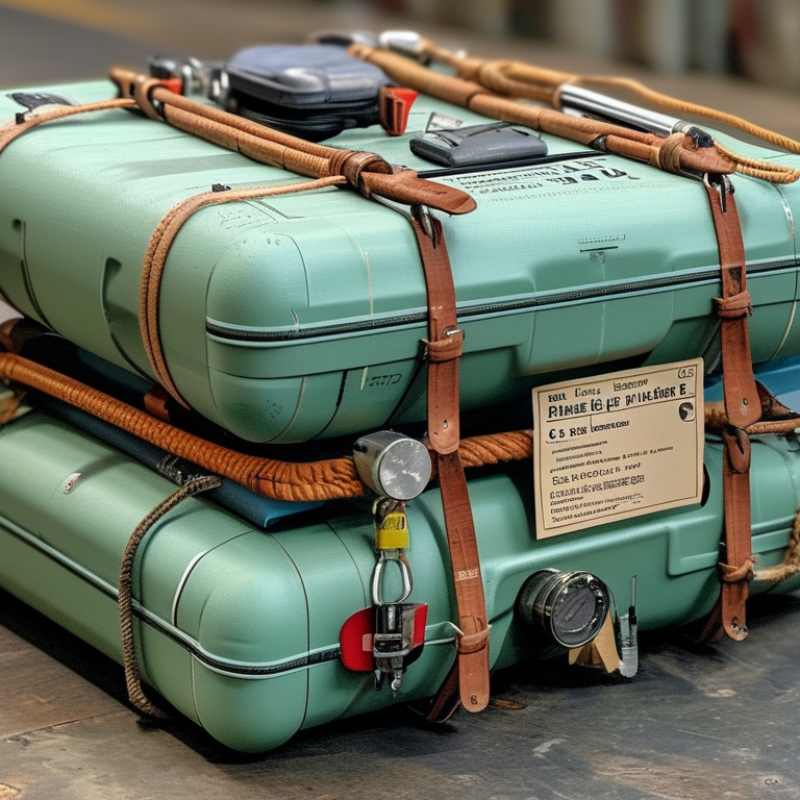
Under 2026 aviation rules, a “life raft” means more than any inflatable boat. Regulators generally look at its intended emergency function, construction, packed condition, and inflation equipment. A certified survival raft normally has buoyancy chambers, an inflation system, and equipment designed for water evacuation. A pool float, inflatable kayak, or camping mattress usually does not qualify.
The difficult part is the packed kit. Compressed gas cylinders, batteries, chemical lights, and repair cartridges may trigger separate dangerous-goods requirements. The raft itself might be acceptable as checked baggage, while one attached component needs approval or removal. Airline and national rules can also differ. Ask for written confirmation before arriving at the airport.
IATA’s 2024 Safety Report recorded 40 accidents across about 40.6 million flight sectors, or 1.13 accidents per million sectors. That figure does not decide baggage acceptance, but it explains why operators inspect emergency equipment carefully. FAA PackSafe guidance also emphasizes examining each component, not relying only on a product label. My practical mistake would be assuming “life-saving appliance” guarantees cabin approval. It does not. Measure the packed raft, photograph its labels, and provide the cylinder specification early. A small detail can change the answer.
Airline and airport baggage policies deserve careful checking before packing a life raft. A raft may be oversized, fragile, or treated as specialized sporting equipment. Ask the airline’s baggage and dangerous-goods teams separately. Their answers may differ. Request written approval, including size, weight, packaging, and check-in requirements.
Inspect the raft’s inflation system closely. Some models include compressed-gas cylinders, triggering additional transport conditions. Do not rely on a general baggage webpage. Provide the model details, cylinder information, and packing photographs when contacting the airline. Airport security may inspect the equipment again, especially during transfers or at the return airport. Leave enough time for manual screening.
Industry data shows why small mistakes matter. SITA’s 2024 Baggage IT Insights reported 6.9 mishandled bags per 1,000 passengers in 2023. A poorly labeled raft can become harder to trace. ACI World recorded about 8.5 billion passenger journeys globally in 2023, creating wide differences in local handling procedures. IATA’s Dangerous Goods Regulations should guide the airline’s assessment, but they do not replace airport instructions. Keep approval emails, receipts, and packing documents with you. The weak assumption is believing one airport’s decision applies everywhere. It often does not.
Carrying a life raft by air is rarely a simple baggage decision. The raft fabric is usually less restrictive than its inflation system. Under the IATA Dangerous Goods Regulations, 66th Edition (2025), compressed-gas cylinders require classification, quantity checks, and airline approval. An installed cylinder may be accepted only when fully empty, protected from damage, or documented under an applicable exception. Rules can differ between passenger baggage and cargo.
Small details matter. A carbon-dioxide cartridge can trigger dangerous-goods controls. So can a separate compressed-air bottle. Remove loose cartridges only when the manufacturer’s instructions permit it. Keep valve caps fitted and prevent movement inside the case. IATA’s 2024 safety report recorded 1.13 accidents per million sectors, showing why airlines treat pressure equipment conservatively. That statistic does not prove every raft is dangerous. It does show why screening procedures remain strict.
Other components create separate questions. Flares and smoke signals are pyrotechnic articles and generally need specialist cargo handling, not cabin or checked baggage transport. Lithium batteries for locator lights may face watt-hour and terminal-protection limits under IATA guidance. Adhesive, fuel-like solvents, and sharp repair tools can also require review. The FAA PackSafe guidance advises travelers to contact the airline before arriving at the airport. That is practical advice.
A careful traveler should photograph each component, record cylinder specifications, and request written approval. I would not rely on a vague telephone promise. Airline staff may interpret incomplete information differently. Rules also change, and this is where personal assumptions become risky. Check the current IATA DGR, ICAO Technical Instructions, national aviation authority guidance, and the operating airline’s conditions before packing.
2026 Top Legal Rules for Carrying a Life Raft on Flights?
How to Prepare, Pack, and Declare a Life Raft
Carrying a life raft by air requires careful preparation, because airline and national rules can differ. Check the current baggage and dangerous-goods guidance before buying a ticket. An inflatable raft may contain a compressed-gas cylinder, battery, or emergency accessories. These parts can affect whether the raft travels as checked baggage, cabin baggage, or cargo. Do not assume an online listing is accurate. Ask the airline’s dangerous-goods desk for written approval.
Pack the raft in a strong protective container. Prevent sharp folds, accidental inflation, and movement during handling. Keep the manufacturer’s specifications, cylinder details, and safety data accessible. If the cylinder is removable, ask the airline whether it must travel separately. At check-in, declare the raft clearly and show its labels. Arrive early. Airport staff may need extra inspection time.
Tips: Contact the airline before packing. Photograph the raft, cylinder, and labels. Use original documentation when available. Never hide the equipment inside ordinary luggage. Confirm rules again before the return flight, since local procedures may differ. I would also leave room for correction; a previous approval may not cover a changed route or aircraft. Some airports apply stricter screening than expected. Be patient and prepared.
How to prepare, pack, and declare a life raft and its regulated components before air travel.
The chart shows the number of key compliance checks commonly triggered by each item. A life raft may contain compressed-gas cylinders, pyrotechnic signals, batteries, or sharp tools, so passengers should obtain advance approval from the operating airline, keep components safely packaged, and declare regulated contents before check-in. Acceptance rules can vary by route, aircraft, and local law.
2026 Top Legal Rules for Carrying a Life Raft on Flights
Carrying a life raft by air is not governed by one universal rule. International and domestic flights may apply different aviation, security, and customs requirements. A raft that passes screening at one airport may need extra review elsewhere. In practice, the departure country, transit country, arrival country, airline, and aircraft type can all matter.
The raft’s design is important. A compact, non-inflated raft may be treated differently from one containing compressed gas cylinders, batteries, repair chemicals, or emergency signaling equipment. Gas cartridges often require protective packaging and quantity limits. Some authorities may permit them in checked baggage, carry-on baggage, or neither. The written policy matters more than a general website summary.
Allow extra time.
Before traveling, contact the airline’s dangerous-goods or special-baggage department. Provide the raft’s exact model description, packed dimensions, weight, cylinder details, and safety data. Ask for written approval, especially when the itinerary crosses borders. Security officers may inspect the container, and customs officials may request additional documents. Domestic routes can sometimes offer simpler procedures, but local rules still vary. International travel adds transit controls and import restrictions.
A practical mistake is assuming “marine safety equipment” guarantees acceptance. It does not. Regulations change, and staff may interpret unclear equipment differently. Recheck the rules shortly before departure, keep the raft accessible for inspection, and carry printed documentation. This is general information, not a substitute for current advice from the relevant aviation authority.
| Rule Set or Jurisdiction | Carry-on Treatment | Checked-Baggage Treatment | Inflation Cylinder or Cartridge | Pyrotechnic or Flare Equipment | Practical Requirement |
|---|---|---|---|---|---|
| International baseline under ICAO dangerous-goods principles | Not automatically accepted. The aircraft operator and the security authority may impose additional limits on bulky equipment, pressure vessels, or hazardous components. | Often the more practical option, but acceptance still depends on the operator, the route, the equipment design, and any dangerous-goods restrictions. | A cylinder containing compressed or liquefied gas must be assessed under dangerous-goods rules. Approval, protection against accidental activation, and documentation may be required. | Flare cartridges, signal rockets, and other explosives or pyrotechnics are generally not accepted in passenger baggage unless a specific legal exception applies. | Obtain written operator approval before travel and disclose every hazardous component, not just the raft fabric. |
| United States domestic flights | A life raft is not guaranteed to pass the security checkpoint or be accepted in the cabin. Final screening decisions are made at the airport, and operator approval may be required. | May be accepted when packed to prevent damage or accidental inflation and when all applicable hazardous-material requirements are met. | Installed cylinders and spare cartridges must comply with U.S. hazardous-material rules. Do not assume that a cylinder is allowed merely because it is supplied with safety equipment. | Explosives, ammunition, and most signaling flares are prohibited in both carry-on and checked baggage. | Check the current federal dangerous-goods guidance and contact the operating carrier before arriving at the airport. |
| Canada domestic flights | Security screening can require inspection or refusal of oversized, pressurized, or hazardous components. Cabin carriage should be treated as subject to prior approval. | Possible only when the item and its components meet Canadian dangerous-goods and baggage conditions and the operator accepts the package. | Compressed-gas cylinders and cartridges require a specific assessment; the cylinder must be secured against release, impact, or leakage. | Flares and other explosives are generally prohibited in passenger baggage. | Separate removable cartridges and any signaling devices before packing unless the applicable authority expressly permits them together. |
| European Union flights | EU aviation-security rules do not create an automatic right to carry a life raft in the cabin. The security screener and operating carrier may refuse it because of size, construction, or hazardous contents. | Usually requires advance coordination where the raft contains gas cylinders, activation devices, or other regulated articles. | Gas cylinders are controlled under dangerous-goods requirements. The operator may need to confirm whether the cylinder is installed, empty, discharged, or otherwise permitted. | Pyrotechnics and signaling devices are generally forbidden in passenger baggage under European dangerous-goods restrictions. | Review the departure airport's security list as well as the dangerous-goods rules of the operating carrier. |
| United Kingdom flights | A life raft may be referred for additional screening or rejected in the cabin. Airport security rules and operator baggage policies both apply. | May be considered as checked baggage only after the operator confirms that its construction and dangerous components are acceptable. | Compressed-gas contents must be declared and assessed. A pressure cylinder should be protected from accidental operation and packed according to the operator's instructions. | Flares, fireworks, and similar pyrotechnic articles are not normally permitted in either cabin or checked baggage. | Request written confirmation before travel, particularly for international journeys or connecting flights. |
| Australia domestic flights | Cabin carriage is subject to screening, size limits, and operator acceptance. A life raft with a pressure vessel should not be taken to the checkpoint without prior confirmation. | Possible in some circumstances, but the operator must determine whether the raft, cylinder, and accessories are permitted and how they must be packed. | Gas cylinders and cartridges are regulated articles. Their status depends on the gas, quantity, pressure, condition, and whether the component is installed in the raft. | Signal flares and other explosives are generally prohibited in passenger baggage. | Confirm the rules for both the departure and arrival airports because domestic and international procedures may differ. |
: Possibly, but acceptance depends on its cylinder, batteries, accessories, route, aircraft, and airline policy. Do not assume approval.
Review current baggage, security, dangerous-goods, and customs requirements. Ask the airline’s special-baggage department for written guidance.
It may, but the packed raft, cylinder, and accessories can receive different treatment. Some items may require separate handling or cargo transport.
Use a strong protective container with enough space to prevent movement and sharp folds. Prevent accidental inflation. Keep labels visible when possible.
Provide the exact model description, packed dimensions, weight, cylinder details, and available safety documents. Clear details reduce repeated questions.
Yes. Declare it clearly and show its labels and documents. Airport staff may need extra inspection time. Arrive early.
Keep manufacturer specifications, cylinder information, safety data, and written airline approval accessible. Printed copies help when airport communication becomes difficult.
They can be. International routes may involve transit controls, customs checks, and import requirements. Domestic routes may seem simpler. They still vary.
No. Declare the equipment openly and keep it accessible for inspection. Hiding it can create delays and confusion.
Yes. A previous approval may not cover a changed route, aircraft, or local procedure. I would recheck shortly before departure. Assumptions fail.
Carrying a life raft on a flight requires careful attention to how aviation authorities and airlines classify the equipment. What are the legal requirements for carrying a life raft on a flight? The answer may depend on whether the raft is inflatable, packed in a case, or equipped with emergency accessories. Travelers should review the baggage rules of both the departing and arriving airports, contact the airline before travel, and confirm whether the item must be checked, approved in advance, or transported separately.
Special attention is needed for inflation systems, compressed gas containers, batteries, signaling devices, and other components that may have safety limits. Before departure, inspect the raft, follow the manufacturer’s packing instructions, protect it from damage, and keep any required documentation accessible. Declare the equipment accurately at check-in and allow extra time for inspection. Domestic and international flights may apply different procedures, so travelers should verify current requirements for every airline, airport, and country on the itinerary.

Aero Apex