An emergency water landing is frightening, but clear actions can improve your chances of getting out safely. The first seconds may feel confusing: alarms sound, the cabin tilts, and water can appear at a window. What is the best way to survive an emergency water landing? Follow the cabin crew’s instructions, protect yourself during impact, and leave the aircraft promptly when directed. No single action guarantees survival, and conditions can change quickly.
Before impact, listen carefully to the safety briefing and locate the nearest usable exit. Adopt the brace position shown by the crew. Keep your seat belt fastened until instructed to release it. Leave bags behind; reaching for a phone or suitcase can block a narrow aisle. Move toward an exit, but avoid an opening where water is rushing in. If your route is blocked, use another exit when it is safe to do so. Small choices matter.
Inflate your life vest only after leaving the aircraft, unless crew members give different instructions. An inflated vest inside a flooding cabin can make it harder to move through an exit. Once outside, follow crew directions and board a raft if one is available. Stay with other survivors, conserve warmth, and make yourself visible to rescuers. Training and preparation help, yet real emergencies are messy. People may hesitate, misunderstand instructions, or lose sight of an exit. That is worth remembering: focus on the next safe action, not on doing everything perfectly.
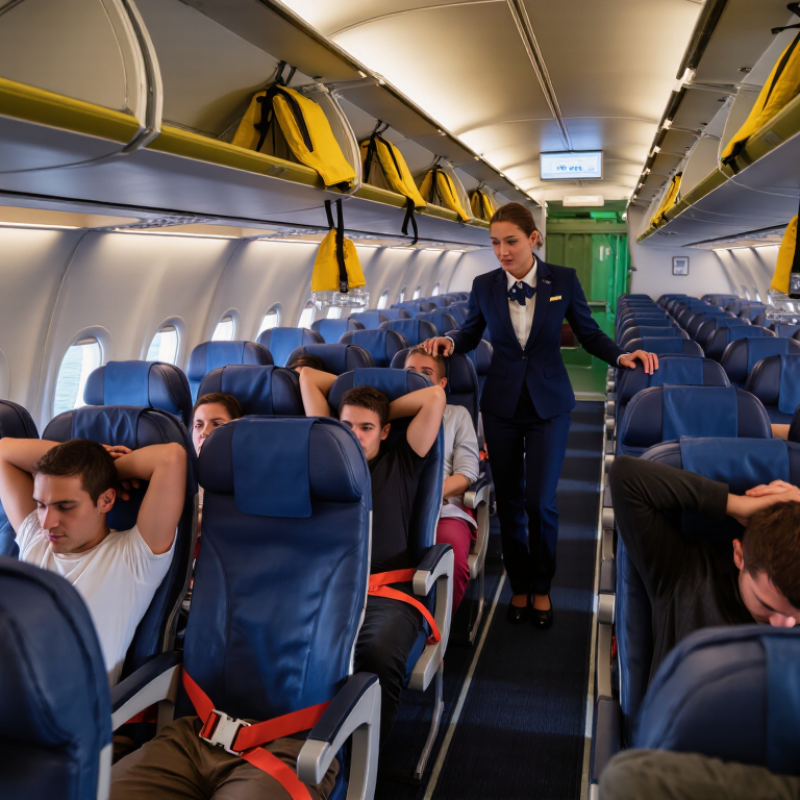
Prepare for Impact by Following the Crew’s Instructions
In an emergency water landing, the cabin can quickly become noisy, crowded, and hard to navigate. The safest first move is to listen. Crew members have practiced the sequence and can direct passengers toward usable exits. Follow each command promptly, even if another exit looks closer. Leave bags behind; a suitcase can block an aisle when seconds matter. It is easy to assume you will remember every instruction. Stress can make that assumption unreliable.
The NTSB’s report on US Airways Flight 1549 documents how the crew prepared passengers for impact and directed the evacuation after the Hudson River landing. The FAA’s 14 CFR 25.803 sets a 90-second evacuation demonstration standard for transport aircraft, with half the exits unavailable. That is a certification test, not a promise about real emergencies. Conditions can change quickly, so listen for updated directions and move without pushing.
Tips: Keep your seat belt fastened low and tight, and brace when instructed. Note the nearest exits, including one behind you. If using a life vest, put it on as directed, but inflate it only after leaving the aircraft; an inflated vest can make moving through a narrow exit harder. Stay low, hold a handrail, and follow crew signals toward safety. A small delay can matter.
China Best Way to Survive an Emergency Water Landing? - Prepare for Impact by Following the Crew’s Instructions
| Phase |
What to Do |
Why It Matters |
| Before impact |
Listen carefully to the crew and follow their instructions. Put on your seat belt, tighten it low across your hips, and adopt the brace position you are shown. |
Crew instructions are specific to the aircraft and situation. A secured belt and correct brace position help reduce injury risk during impact. |
| Prepare to evacuate |
Locate your nearest exit and identify an alternative exit. Pay attention to exit instructions and keep your shoes on if practical. |
Knowing more than one route can help if an exit is blocked or unusable after landing. |
| After the aircraft stops |
Unfasten your seat belt when instructed or when it is safe to evacuate. Leave your belongings behind and move promptly to a usable exit. |
Bags can slow evacuation, block aisles, and obstruct exits. |
| Use your life vest |
Put on the life vest as directed, but inflate it only after you have exited the aircraft. |
An inflated vest inside the cabin can make it harder to move through an exit or submerged area. |
| Choose an exit |
Follow crew directions and use an exit that is safe and accessible. If your route is blocked by water, debris, or damage, move to another usable exit. |
Conditions around exits may differ; do not persist with a route that is unsafe. |
| Once outside |
Move clear of the aircraft and follow crew directions. Use a raft or other flotation equipment if available, and help others only when it is safe to do so. |
Moving away from the aircraft reduces exposure to hazards around it, while flotation equipment helps keep people together and supported. |
| Waiting for rescue |
Stay with the group or raft, make yourself visible to rescuers, and conserve energy. In cold water, keep as much of your body out of the water as possible. |
Staying together can make people easier to locate. Cold water can quickly reduce body heat and physical ability. |
Key reminder: Follow the cabin crew’s instructions throughout the emergency. The safest actions can vary with the aircraft, landing conditions, and the exits available.
Brace Properly and Protect Your Head and Neck
An emergency water landing can throw a passenger forward before they have time to react. Keep your seat belt low and tight, and listen for the crew’s brace command. The FAA’s Passenger Safety Information briefing guidance describes brace positions that protect the head and reduce uncontrolled movement. The right position depends on your seat and the space in front of you. Follow the safety card and crew instructions, rather than copying a position from memory.
Keep it simple. If instructed to lean forward, bend at the hips, bring your head down, and keep your arms where the briefing directs. Avoid twisting your neck to look around. A seatback may feel close; use only the hand placement specified for your seat. The NTSB’s report on US Airways Flight 1549 recorded 155 people aboard, with five serious and 78 minor injuries. Those figures describe one event, not proof that a particular brace position caused a specific outcome. Still, the report shows why preparation matters. Even a practiced position can feel awkward under stress. That is worth thinking about before the cabin gets loud.
China: How to Brace for an Emergency Water Landing
Follow crew instructions and use the brace position demonstrated for your seat. Protect your head and neck, and remain braced until the aircraft has stopped and the crew directs you to move.
The bars show the order of a general brace checklist, not measured risk or survival probabilities. The exact brace position can vary by aircraft and seat.
Unbuckle and Evacuate Once the Aircraft Stops
After a water landing, unbuckle as soon as the aircraft stops and move toward a usable exit. Do not wait to collect bags. Seconds matter.
Follow crew instructions, and avoid exits blocked by water, fire, or damage. If you use a life vest, put it on inside but inflate it only after leaving the cabin; an inflated vest can make it harder to move through a narrow, flooded doorway.
The FAA’s aircraft-certification rule, 14 CFR 25.803, uses a 90-second evacuation demonstration, with half the exits unavailable. That is a test benchmark, not a promise that every real evacuation will take 90 seconds. In its report on US Airways Flight 1549, the NTSB documented that all 155 occupants survived the Hudson River ditching. Some passengers evacuated onto the wings while others used slides. Conditions vary, and a calm plan can still feel confusing when water rises around your feet. Leave promptly, keep moving, and take direction from the crew.
Exit Through a Safe Route and Move Away from the Aircraft
In a water landing, the safest exit is not always the closest one. Wait until the aircraft has stopped moving, then follow crew instructions and assess the nearest usable route. Look for water rising around an exit, smoke, debris, or a jammed door. If water is pressing against an exit, do not force it open; choose another route if possible. It is easy to hesitate. A clear decision matters.
Keep low if smoke is present, and use seatbacks or handholds to steady yourself as you move. Leave bags behind; they can block a narrow aisle. If you are wearing an inflatable life vest, inflate it after leaving the cabin, not inside. Outside, swim clear of the fuselage and wings, watching for floating debris and other people. Move away from the aircraft without losing sight of nearby survivors or rescue signals. Conditions can change quickly, and panic makes distance hard to judge. I might still look back too often. Follow crew directions, conserve energy, and hold onto available flotation while waiting for help.
Conclusion
What is the best way to survive an emergency water landing? Start by listening carefully to the crew and following their instructions, including guidance on life jackets and exits. Before impact, brace in the position you have been shown, keeping your head and neck protected. Stay calm and focus on the next step rather than trying to gather belongings.
Once the aircraft has stopped, unbuckle and move toward a safe exit, avoiding routes that appear blocked or hazardous. Evacuate promptly, then move away from the aircraft to a safer location. If possible, stay with other survivors, make yourself visible to rescuers, and use available signaling methods. Conserve energy, keep warm, and follow crew or rescue personnel instructions while waiting for help.
 Aero Apex
