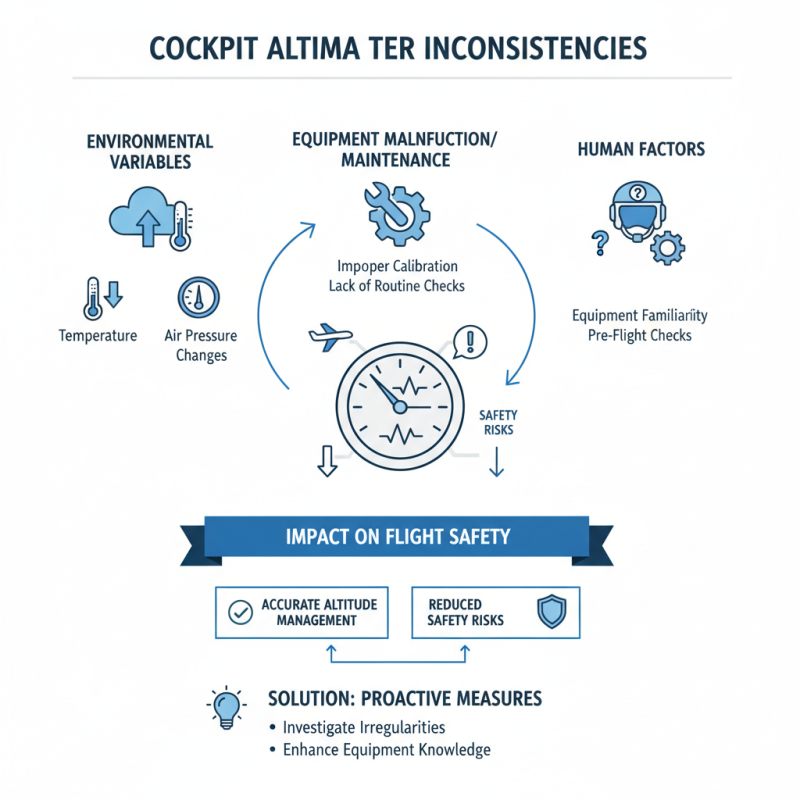
The altimeter is a critical instrument in aviation. Pilots rely on it to ensure safe altitude management. However, many pilots face a perplexing issue: "Why is my cockpit altimeter giving inconsistent readings?" This question often stems from various factors that can affect altimeter performance. According to the Federal Aviation Administration (FAA), inaccurate altimeter readings can lead to serious safety risks.
Environmental variables, such as temperature and air pressure, play a significant role. A study by the National Oceanic and Atmospheric Administration (NOAA) highlights that changes in atmospheric conditions can mislead altimeter readings. Additionally, improper calibration and maintenance can contribute to inconsistencies. For example, research indicates that nearly 30% of pilot reports on altimeter discrepancies are linked to equipment malfunction or lack of routine checks.
Understanding these factors is essential for pilots. When experiencing altimeter irregularities, it's crucial to investigate thoroughly. This process often reveals overlooked maintenance needs or the need for better equipment familiarity. Ultimately, addressing the question "Why is my cockpit altimeter giving inconsistent readings?" can enhance overall flight safety and operational reliability. By acknowledging potential issues, pilots can take proactive measures to ensure accurate altitude measurement.
Understanding Altimeter Functionality and Principles
The cockpit altimeter plays a critical role in flight safety. Understanding how it works is essential for pilots. An altimeter measures atmospheric pressure to determine altitude. When the pressure changes due to weather, readings can fluctuate unexpectedly.
Research indicates that nearly 30% of altitude discrepancies arise from incorrect settings. Pilots must adjust the altimeter for local pressure changes. If the altimeter is not set accurately, it can lead to dangerous situations, such as flying too low. Additionally, factors like temperature and humidity affect air density, which further complicates readings.
Inconsistent readings can also stem from instrument errors. The FAA reports that faulty altimeters account for a notable percentage of instrument failures during flight. Regular maintenance checks are vital for ensuring altimeter accuracy. Pilots should be aware of their limits and always verify their equipment. Addressing these issues can prevent serious incidents in the aviation industry.
Why Does My Cockpit Altimeter Show Inconsistent Readings?
| Factor |
Description |
Effect on Altimeter |
Possible Solutions |
| Temperature |
Changes in air temperature can affect pressure readings. |
May indicate higher or lower altitude than actual. |
Adjust altimeter setting according to temperature correction tables. |
| Pressure Systems |
Variations in weather systems lead to pressure changes. |
Inaccurate altitude readings during pressure changes. |
Regularly update barometric pressure setting on altimeter. |
| Calibration |
Altimeters require periodic calibration to ensure accuracy. |
Potential for consistent altimeter discrepancies. |
Have altimeter calibrated by a certified technician. |
| Installation Issues |
Improperly installed altimeter may not perform correctly. |
Can lead to constant misreadings. |
Check installation and connections thoroughly. |
| Mechanical Issues |
Wear and tear can cause mechanical failures in altimeters. |
Incorrect altitude readings due to internal faults. |
Inspect for mechanical problems and replace if necessary. |
Common Causes of Inconsistent Altimeter Readings
Inconsistent altimeter readings can be a significant issue for pilots. Various factors contribute to this problem, often leading to confusion during flight. One of the primary causes is atmospheric pressure changes. According to the National Weather Service, local weather variations can cause altimeters to misread by as much as 100 feet per 1 inch of mercury. This discrepancy can be critical when flying in turbulent conditions or approaching an airport.
Another factor involves instrument calibration. Regular maintenance is crucial. The FAA recommends pilots check altimeter settings at least once per flight. Neglecting this can lead to errors in altitude awareness. In some cases, even a minor calibration issue can cause significant altitude variation. Reports suggest that 10% of pilot errors stem from faulty altimeter readings.
Lastly, human factors come into play. Distractions in the cockpit can lead to missed adjustments. A study by the Aviation Safety Reporting System indicated that altimeter-related errors were responsible for nearly 50 incidents in a single year. These errors highlight the importance of staying vigilant and maintaining awareness of airborne altitude. As pilots, understanding these causes is essential for safe navigation and flight safety.
Weather Influences on Altimeter Accuracy
Weather plays a crucial role in the accuracy of an altimeter. As an aircraft ascends or descends, changes in atmospheric pressure can cause fluctuations in readings. A sudden drop in temperature, for example, can lead to an increase in air density, affecting the altimeter's performance. Pilots should be aware of these conditions and consult relevant meteorological reports.
Inconsistent readings can also occur in areas with significant weather disturbances. A thunderstorm or rapidly moving cold front can create pressure variations. These fluctuations may confuse the altimeter, leading to unreliable altitude readings. Pilots often rely on
real-time weather updates to mitigate these effects during flight.
Maintaining calibration and understanding weather impacts is essential. An improperly set altimeter can also mislead pilots, especially in poor visibility.
Regular checks and situational awareness are key. It is vital to recognize that while technology aids pilots, it does not eliminate the need for critical thinking and continuous learning in aviation.
Impact of Aircraft Configuration on Altimeter Performance
Aircraft configuration can significantly impact altimeter performance. According to data from the FAA, changes in weight, center of gravity, and aerodynamic features affect altitude readings. For instance, an aircraft in a clean configuration at takeoff often shows different altimeter indications than the same aircraft during approach with landing gear deployed. This is due to variations in drag and lift, which can lead to discrepancies in pressure sensing.
Aerodynamic changes can cause pressure differentials that confuse altimeters. A report from the National Transportation Safety Board states that incorrect altimeter settings led to several accidents. Pilots must ensure proper calibration and account for changes in configuration. If the aircraft is not leveled correctly during climb, the altimeter can read inaccurately, contributing to dangerous miscalculations.
Constant vigilance is needed for pilots. Flight crews should be aware of these factors and regularly check altimeter settings. Data shows that routine checks can reduce errors significantly. Measures like cross-referencing altimeters with GPS can offer additional confirmation. It’s essential to reflect on these details to avoid potential mishaps in flight operations.
Impact of Aircraft Configuration on Altimeter Performance
This chart illustrates the inconsistency of altimeter readings based on different aircraft configurations. The data represents altimeter readings in feet for various configurations including "Clean," "Landing Gear Extended," and "Flaps Extended." The discrepancies highlight how changes in aircraft setup can affect altimeter performance.
Maintenance Practices to Ensure Altimeter Reliability
Maintaining the reliability of cockpit altimeters is crucial for aviation safety. Inconsistent altimeter readings can stem from various factors, including installation errors, environmental conditions, and incorrect maintenance practices. A report by the Federal Aviation Administration (FAA) indicated that nearly 30% of altimeter discrepancies are linked to improper maintenance. This emphasizes the importance of adhering to established maintenance protocols.
Routine checks are essential for accurate altimeter performance. Regular calibration should occur in accordance with manufacturer guidelines. Technicians should be trained to identify and rectify potential issues. According to the National Transportation Safety Board (NTSB), 20% of accidents involve altimeter malfunctions. This statistic reinforces the necessity of diligent maintenance practices.
Tips for ensuring altimeter reliability include:
- Use high-quality tools for calibration.
- Document all maintenance activities thoroughly.
- Conduct pre-flight checks on the altimeter settings.
Environmental conditions can also adversely affect altimeter readings. Changes in temperature and pressure must be accounted for during flight. Pilots should remain vigilant and record any discrepancies during their flights. Regular awareness training can improve immediate response times.
FAQS
: An altimeter measures atmospheric pressure to determine altitude.
Altitude discrepancies arise mainly from incorrect settings, weather changes, or instrument errors.
Weather changes can cause atmospheric pressure fluctuations, leading to inaccurate altitude readings.
Reports indicate that nearly 10% of pilot errors result from altitude misreadings.
Regular maintenance ensures accuracy and prevents incorrect readings that could lead to dangerous situations.
A sudden drop in temperature can increase air density, which affects altimeter accuracy.
Distractions in the cockpit may cause pilots to miss necessary altimeter adjustments.
Pilots should check altimeter settings at least once per flight to ensure accuracy.
Pilots can consult meteorological reports and rely on real-time weather updates during flight.
Continuous learning and critical thinking remain essential for safe navigation in aviation.
Conclusion
The article titled "Why Does My Cockpit Altimeter Show Inconsistent Readings?" delves into the complexities of altimeter functionality and the various factors that can lead to discrepancies in readings. Understanding the principles behind altimeter operation is crucial for pilots, as inconsistency can be influenced by several common causes such as pitot tube blockages, instrument errors, and calibration issues.
Moreover, weather conditions play a significant role in altimeter accuracy, particularly when atmospheric pressure changes rapidly. Aircraft configuration, including weight distribution and altitude changes, can also impact performance. To address the question, "Why is my cockpit altimeter giving inconsistent readings?", the article emphasizes the importance of regular maintenance practices to ensure altimeters remain reliable and accurate, ultimately enhancing flight safety.

 Aero Apex