High-altitude flying presents unique challenges, particularly when it comes to eye protection. Regular sunglasses, often deemed sufficient for everyday use, fall short in this specialized environment. Dr. Jonathan L. Fitz, an aviation optometrist, emphasizes this risk by stating, "Standard sunglasses do not block UV rays effectively at higher elevations."
As pilots ascend beyond 10,000 feet, UV radiation increases significantly. The atmosphere becomes thinner, allowing more UV light to penetrate. Conventional sunglasses typically provide minimal protection against UVA and UVB rays. The consequences of inadequate protection can be severe, including vision damage and increased glare, which can hinder a pilot's ability to see clearly.
Many may wonder, "Why can't I use regular sunglasses for high-altitude flying?" The answer lies in the specific demands of flying. Specialized sunglasses designed for altitude use can filter out harmful rays and enhance visual clarity. It's crucial for aviators to prioritize eye protection to ensure safety. Regular sunglasses may seem convenient, but in aviation, every detail matters.
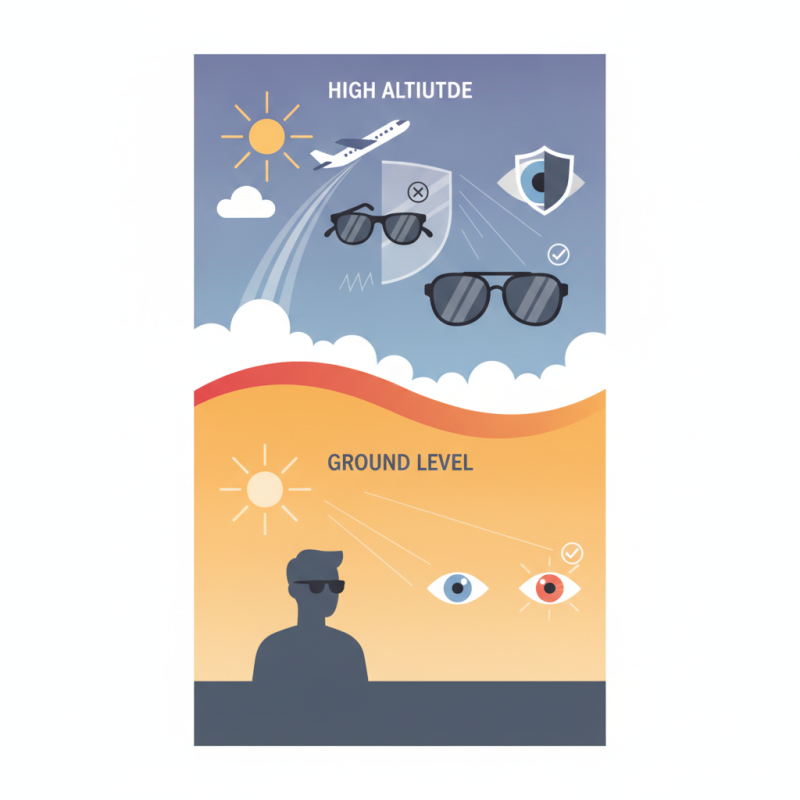
Understanding the Impact of UV Rays at High Altitudes
High altitude flying exposes pilots and passengers to intense UV rays. At elevations above 8,000 feet, UV radiation increases by about 10% for every 1,000 feet. Traditional sunglasses often lack the necessary protection against this heightened exposure. Many common sunglasses only block 80% of UV rays, while experts recommend 100% UV protection.
The risks of inadequate UV protection are significant. Prolonged exposure can lead to eye damage such as cataracts and photokeratitis. These conditions can develop rapidly and may threaten vision. A study by the American Academy of Ophthalmology underscores that UV exposure can cause irreversible harm over time. Regular sunglasses are simply not equipped to handle these conditions effectively.
Additionally, regular sunglasses often do not provide adequate polarization. Glare from the sun can be blinding at high altitudes, increasing the risk of accidents. Pilots require clear visibility to ensure safety. In some cases, standard shades can warp colors, leading to misjudgments. This is why specialized eyewear is essential for those flying at high altitudes.
Differences Between Regular and Specialized Sunglasses
High altitude flying presents unique challenges for pilots, especially when it comes to eye protection. Regular sunglasses simply do not meet the specific needs of aviators. At cruising altitudes, UV radiation increases significantly. According to the FAA, UV intensity can be up to three times greater at 10,000 feet. Standard sunglasses may block visible light but often lack the necessary UV protection needed in these conditions.
Specialized sunglasses are designed with high-altitude flying in mind. They include features such as polarized lenses to reduce glare from reflective surfaces like clouds and snow. This is crucial, as glare can impair visibility, leading to dangerous situations. Furthermore, these specialized lenses often have additional anti-fog and anti-scratch coatings, enhancing durability and functionality. A study published by the Aerospace Medical Association highlights that wearing the right eyewear can reduce eye strain and improve overall visual acuity in flight.
Additionally, the design of these sunglasses considers the cockpit environment. Many have a wrap-around style that prevents peripheral glare while maintaining a full field of view. Regular sunglasses may slip off or become uncomfortable during flight, causing distractions. These distractions could lead to serious errors in judgment. Investing in proper eyewear is not just about comfort; it’s a matter of safety and performance at high altitudes.
Why Are Regular Sunglasses Unsafe for High Altitude Flying? - Differences Between Regular and Specialized Sunglasses
| Feature |
Regular Sunglasses |
Specialized Sunglasses |
| UV Protection |
May block some UV rays |
100% UV protection |
| Polarization |
Variable levels |
High-quality polarization |
| Color Distortion |
Can distort colors |
Minimal color distortion |
| Lens Material |
Inconsistent quality |
High impact-resistant material |
| Field of View |
Narrow |
Wide for better visibility |
| Altitude Suitability |
Unsafe above 10,000 feet |
Safe for high altitude |
The Role of Atmospheric Pressure in Vision Safety
High altitude flying exposes pilots and passengers to reduced atmospheric pressure. As altitude increases, the air thins. This reduction affects oxygen levels, impacting vision. Regular sunglasses do not provide adequate protection against these changes.
Studies show that at 10,000 feet, the risk of visual impairment grows. For example, the Federal Aviation Administration highlights the risks of hypoxia. This condition can lead to blurred vision and decreased visual acuity. Traditional sunglasses may further restrict oxygen intake due to their dark lenses, compounding the issue. Without proper UV protection, glare can cause discomfort, distracting pilots at critical moments.
In high altitudes, the eyes are more sensitive. The sun’s rays are stronger, and UV radiation increases. A report from NASA indicates that UV exposure at high altitudes can increase the risk of cataracts. Pilots need high-altitude specific eyewear designed to enhance vision clarity. Simply wearing regular sunglasses is not enough. Even experienced pilots might overlook this crucial detail, placing themselves at risk.
Potential Risks of Using Non-Aviation Sunglasses at Altitude
When flying at high altitudes, the risk of using regular sunglasses increases significantly.
Standard sunglasses may not provide adequate UV protection. The sun's rays are more intense up there,
and regular lenses may allow harmful UV radiation to penetrate. This can lead to temporary loss of vision
or long-term damage to the eyes.
Additionally, regular sunglasses often lack proper polarization. This means glare from clouds or snow can be
a real problem. Pilots need optimal visibility to avoid dangerous situations. Inadequate eyewear adds an unnecessary risk to flying.
Tips: Always choose sunglasses labeled for aviation use.
They are designed to filter UV rays effectively. Inspect them regularly for scratches or damage.
Damaged lenses can compromise vision. Lastly, don't forget to consider the fit.
Poorly fitting sunglasses can slip, leading to distractions during flight.
Recommended Sunglasses Features for High Altitude Flying
High altitude flying poses unique risks to eyes. Regular sunglasses often fail to offer adequate protection against harmful ultraviolet (UV) rays. At higher elevations, UV radiation can be up to 50% stronger than at sea level. This increased exposure may lead to serious eye conditions. Pilots must choose sunglasses specifically designed for these conditions.
When selecting sunglasses for high altitude flying, look for 100% UV protection. Polarized lenses are beneficial, reducing glare from the sun and reflective surfaces, enhancing visibility. Darker lenses are not always better; they may not provide adequate UV filtering. A wraparound style can prevent light from entering from the sides. Additionally, consider lenses that meet ANSI Z87.1 standards for impact resistance.
Tips:
Ensure your sunglasses are lightweight. Heavy frames can cause discomfort during long flights. Also, test how well they fit with a headset. An improper fit can lead to distractions in the cockpit. Always prioritize clarity of vision for safety. High altitude flying demands that pilots remain alert, and their eyewear plays a crucial role in this regard.
Conclusion
High-altitude flying exposes pilots and passengers to increased levels of ultraviolet (UV) rays due to the thinner atmosphere. This raises the critical question, "Why can't I use regular sunglasses for high-altitude flying?" Regular sunglasses are typically not designed to provide adequate UV protection or to withstand the unique challenges presented at high altitudes. Specialized sunglasses are engineered to filter harmful rays effectively while also addressing the specific visual demands and atmospheric conditions encountered during flight.
In addition to UV exposure, the role of atmospheric pressure can compromise vision safety, as it may lead to increased glare and distortion. Non-aviation sunglasses often lack essential features such as proper polarization, sufficient lens tinting, and durability required for high-altitude environments. Recommended sunglasses for this scenario should include advanced UV protection, anti-glare properties, and impact resistance to ensure safety and clarity while flying at elevated altitudes.

 Aero Apex