Winter storage can quietly damage aircraft tires before the next flight. Cold temperatures, moisture, ultraviolet exposure, and concentrated weight may create permanent flat spots. These distortions can increase vibration during taxi, takeoff, or landing.
How to store aircraft tires to prevent flat spots during winter? The answer begins with controlled storage, not guesswork. FAA Advisory Circular AC 20-97B, Aircraft Tire Maintenance and Operational Practices, emphasizes correct inflation, inspection, and manufacturer-approved procedures. Michelin Aircraft Tire and Goodyear Aviation technical manuals also recommend clean, dry, temperature-controlled storage away from ozone-producing equipment. Their guidance supports a practical principle: tire condition depends on both time and environment.
The seven tips in this guide translate those requirements into hangar-level actions. You will see how to clean tires, protect them from sunlight, maintain suitable pressure, rotate stored assemblies, and avoid direct contact with cold concrete. A calibrated gauge matters. So does a simple inspection log. Still, storage advice is not one-size-fits-all. Tire size, aircraft weight, wheel configuration, and manufacturer limits can change the correct method. That point is easy to overlook.
Aviation maintenance records show why discipline matters. Small pressure losses may remain unnoticed for weeks. A tire resting in one position may develop a visible contact patch. It may also look acceptable while suffering internal stress. No shortcut is perfect. Use the aircraft maintenance manual and current tire manufacturer instructions before moving or returning any assembly to service.
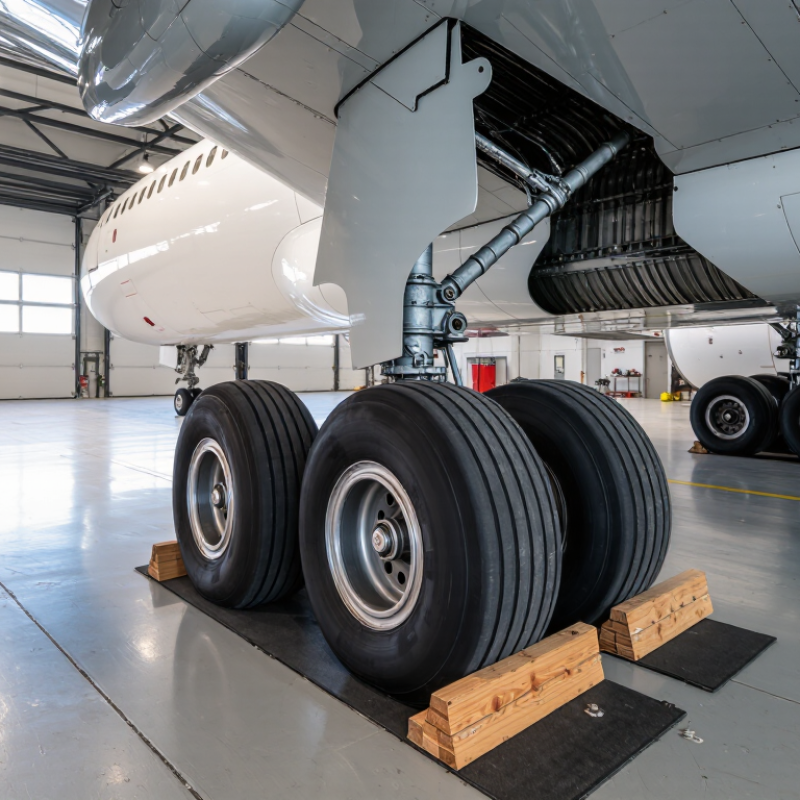
Winter storage creates several hidden risks. Cold rubber becomes less flexible, while condensation can promote corrosion around the wheel assembly. FAA Advisory Circular AC 20-97B identifies ozone, sunlight, heat, moisture, and deformation as major tire-aging hazards. ASTM D1149 also recognizes ozone cracking as a measurable rubber failure mechanism, although its test conditions are not storage limits.
Keep tires clean and completely dry before storage. Store them in a cool, dark, ventilated room, away from electric motors, welders, and battery chargers. Maintain the pressure specified by the approved maintenance manual; never guess. Use a proper rack, keep tires upright when recommended, and avoid stacking heavy items against their sidewalls. For mounted tires, reduce prolonged loading on one contact patch. Rotate or reposition them periodically, and record pressure, inspection dates, and visible changes.
Look closely at the sidewalls. Fine surface cracks, chalky rubber, flattened tread areas, or trapped moisture deserve attention. Do not repair damage by assumption. Ask qualified maintenance personnel to assess it. One practical detail is often missed: moving a tire directly from a freezing shed into a warm room can create condensation inside the assembly. Let it warm gradually, then inspect it again. These steps are simple, but storage records are often incomplete. That weakness deserves correction.
7 Tips to Store Aircraft Tires in Winter Without Flat Spots
Aircraft tire storage begins before the tire reaches the rack. Remove mud, de-icing residue, grease, and embedded stones with mild soap and water. Do not use petroleum solvents or wire brushes. Dry every groove and sidewall completely. Moisture hiding beneath dirt can promote corrosion around wheels and valves.
Use a bright inspection lamp. Check for cuts, foreign objects, tread separation, bulges, exposed cords, sidewall cracking, and valve damage. FAA AC 43.13-1B provides inspection guidance for improper inflation, tire damage, and foreign-object penetration. Record the tire position, pressure, inspection date, and visible defects. Small cracks deserve attention. They may not be harmless aging.
ISO 2230:2019 recommends cool, dry rubber storage, commonly below 25°C and below 65% relative humidity. Keep tires away from sunlight, ozone-producing motors, electrical arcs, fuels, and solvents. Store loose tires upright on a clean surface, without heavy items pressing against their sidewalls. For mounted assemblies, maintain only the pressure specified by approved maintenance data. A monthly visual check helps reveal pressure loss and developing flat spots. Rotate assemblies only when the aircraft maintenance manual permits it. I would not improvise here. A clean tire can still fail if stored under load, near heat, or with incorrect pressure.
| Tip | Storage Action | Recommended Practice | Useful Target or Interval | Why It Helps Prevent Flat Spots |
|---|---|---|---|---|
| 1 | Clean and Dry the Tire | Remove dirt, salt, oil, hydraulic fluid, and de-icing residue with clean water and a mild, non-solvent detergent. Dry the tire completely before storage. | 100% surface dry before bagging or covering | Contaminants can weaken rubber over time, while trapped moisture may promote corrosion of the wheel and damage adjacent components. |
| 2 | Inspect Before Storage | Check the tread, sidewalls, bead area, valve region, and wheel interface for cuts, bulges, cracks, exposed cord, embedded objects, uneven wear, or signs of underinflation. | Inspect before storage and again before return to service | Early detection prevents a stored tire with existing damage from being mistaken for a tire affected only by temporary winter deformation. |
| 3 | Use the Correct Storage Position | Store loose aircraft tires upright on a clean, smooth surface. Do not hang tires from hooks, suspend them by the bead, or place heavy items on top of them. | Keep tires upright and free from external loads | An upright position distributes the tire’s weight more evenly and reduces prolonged compression of one tread section. |
| 4 | Control Temperature and Humidity | Use a cool, dry, well-ventilated indoor area with stable conditions. Avoid freezing exposure, high heat, condensation, and rapid temperature changes. | Preferably about 15–25°C; avoid sustained temperatures above 30°C | Stable conditions reduce rubber hardening, moisture condensation, and changes in tire flexibility that can make temporary flat spotting more noticeable. |
| 5 | Protect from Light, Ozone, and Chemicals | Keep tires away from direct sunlight, electric motors, generators, battery-charging areas, welding equipment, solvents, fuels, oils, and other ozone- or chemical-producing sources. | Use opaque, breathable covers; maintain separation from electrical equipment | Ultraviolet light, ozone, and petroleum-based chemicals can accelerate surface cracking and loss of rubber elasticity. |
| 6 | Rotate Tires During Long Storage | For tires stored for several months, rotate each tire approximately 90 degrees periodically while keeping it upright. Use a clean, level floor and avoid dragging the tire. | Every 30–60 days, unless approved maintenance procedures specify otherwise | Changing the contact point limits long-term compression in one area of the tread and reduces the chance of a persistent flat spot. |
| 7 | Prepare for Return to Service | Allow the tire to reach ambient temperature, verify identification and storage history, check inflation pressure when applicable, and perform a detailed visual inspection before installation. | Complete inspection before every installation | Cold rubber may appear stiffer and pressure readings can vary with temperature; a final inspection confirms the tire is suitable for service. |
| Important: Always follow the applicable aircraft maintenance manual, tire and wheel maintenance instructions, approved storage limits, and local airworthiness requirements. Do not attempt to correct severe or persistent flat spotting by operating an aircraft; remove the tire from service for qualified evaluation. | ||||
Choose a dry, temperature-controlled storage location before winter arrives. Aircraft tires dislike damp floors, direct sunlight, heaters, and ozone-producing electrical equipment. FAA AC 43.13-1B advises storing tires in a cool, dark, and dry area, away from heat and chemical exposure. Many aviation maintenance manuals recommend approximately 15–25°C and relative humidity below 70%.
Keep tires upright on clean racks. Do not stack them horizontally or press heavy equipment against the sidewalls. Rotate each tire about 90 degrees monthly. This small movement reduces prolonged loading on one contact area, which can develop a temporary flat spot. The Tire and Rim Association’s technical guidance also emphasizes protection from sunlight, moisture, and ozone during storage.
Check the floor after rain.
A concrete room may appear dry but still hold moisture near the surface. Place a simple hygrometer beside the tires, not across the room. Inspect for condensation, dirt, valve damage, and unusual sidewall marks before installation. FAA maintenance guidance stresses visual inspection and controlled storage conditions, but it does not replace the tire manufacturer’s approved procedures.
That limitation matters. I have seen storage plans fail because temperature changed sharply overnight. Stable conditions are more useful than a warm room. If the room smells of solvent or contains running motors, choose another location. Sometimes, the “safe” corner is not safe enough.
Winter storage can create flat spots when an aircraft tire carries weight in one position for too long. Correct positioning matters more than many owners expect. Store loose tires upright on a clean, dry surface. Do not stack them horizontally or lean them against sharp edges. Keep each tire away from heaters, sunlight, moisture, solvents, and electric motors that produce ozone.
Tip 1: If the tire remains installed, support the aircraft according to its approved maintenance instructions. Maintain the specified inflation pressure, then check it regularly as temperatures fall. Cold air reduces pressure, sometimes enough to increase sidewall stress. Rotate the wheel or reposition the aircraft only when the maintenance procedure allows it. A careless rotation can create another problem.
Tip 2: Mark the tire’s floor contact point with removable chalk. Turn the tire slightly at scheduled intervals, following the aircraft or tire manufacturer’s guidance. Use approved stands, not improvised blocks. Inspect for sidewall bulges, cracks, pressure loss, or permanent deformation before returning the aircraft to service. I would not rely on appearance alone; a tire can look normal while its internal condition has changed. Record storage dates, pressure readings, and inspections. Good records expose small mistakes before they become expensive surprises.
Winter storage can create flat spots when aircraft tires rest under steady load. Inspect and rotate them throughout the season, not only before installation. FAA Advisory Circular AC 20-97B highlights heat, sunlight, ozone, moisture, and prolonged compression as tire-storage concerns. Keep tires clean, dry, shaded, and away from electric motors or welding areas.
Use the aircraft maintenance manual as the controlling document. If it permits, store tires vertically on a clean surface and rotate each tire one-quarter turn every 30 days. Mark the original contact point with chalk. That small detail makes movement easy to verify. Record the date, tire position, inflation pressure, and visible condition. Check for flattening, sidewall cracking, cuts, embedded objects, and pressure loss. A cold morning reading matters; pressure changes with temperature.
ISO 2230:2018 gives rubber-product storage guidance, including protection from direct sunlight, ozone, and damaging temperature or humidity extremes. Treat those limits as a baseline, not a substitute for aircraft-specific instructions. A weekly inspection is useful when temperatures swing sharply, although a monthly rotation may be adequate in stable storage. That assumption can fail. We have seen apparently sound tires develop a persistent contact mark after long, loaded storage. If a flat spot remains after rotation, do not “exercise” the tire by mounting it automatically. Isolate it and request qualified maintenance evaluation before service.
Use a consistent inspection and rotation routine during winter storage. The schedule below shows three planned inspection and rotation cycles across a 12-week storage period. Check tire pressure, look for deformation or damage, and rotate tires according to the applicable aircraft maintenance instructions.
Wash them with mild soap and water. Remove mud, grease, de-icing residue, and embedded stones. Dry every groove and sidewall completely. Moisture can hide beneath dirt.
Use a bright inspection lamp. Look for cuts, bulges, tread separation, exposed cords, cracks, foreign objects, and valve damage. Small cracks need attention. They may not be harmless aging.
Choose a cool, dry, shaded area. Keep storage below about 25°C and below 65% relative humidity when practical. Avoid sunlight, fuels, solvents, electrical arcs, and ozone-producing motors.
Store loose tires upright on a clean surface. Do not place heavy items against their sidewalls. Keep them unloaded. That detail is easy to miss.
Follow the approved aircraft maintenance data. Do not guess or use a general pressure value. Pressure changes with temperature. A cold morning reading can reveal loss.
Perform a visual inspection at least monthly in stable conditions. Check more often when temperatures change sharply. If permitted, rotate each tire one-quarter turn every 30 days. Mark the contact point with chalk.
Record the tire position, inflation pressure, inspection date, and visible defects. Note cuts, cracks, flattening, foreign objects, and pressure loss. A simple record prevents confusion. It also exposes repeated problems.
Do not automatically mount the tire to “exercise” it. Isolate the tire and request qualified maintenance evaluation. Rotation is not a cure. That assumption can fail.
Storing aircraft tires through winter requires careful preparation because cold temperatures, moisture, uneven pressure, and prolonged contact with one surface can cause cracking, stiffness, or flat spots. How to store aircraft tires to prevent flat spots during winter? Begin by cleaning and drying each tire, then inspect the tread, sidewalls, bead area, and valve components for damage or unusual wear. Record any concerns and confirm that the tires are suitable for storage before placing them away.
Choose a dry, well-ventilated, temperature-controlled location protected from sunlight, chemicals, ozone-producing equipment, and sudden temperature changes. Keep tires properly inflated according to approved maintenance guidance, position them vertically when possible, and use clean supports that do not concentrate pressure in one area. Avoid stacking heavy items on them or leaving them on damp floors. During winter, inspect the tires regularly for pressure loss, moisture, deformation, and surface damage, and rotate or reposition them periodically to distribute load evenly. Allow the tires to return to normal operating conditions before installation.

Aero Apex