In the last decade, the global demand for gimbal stabilizers has surged beyond simple videography into critical industrial and commercial sectors. Originally developed for high-end cinematography, gimbal technology—the use of motors and sensors to maintain a level camera or sensor platform—now underpins industries ranging from search and rescue to precision agriculture and infrastructure maintenance.
Today, the OEM/ODM gimbal stabilizers manufacturer ecosystem is the backbone of this growth. Companies worldwide are no longer looking for off-the-shelf products but are seeking integrated, customized solutions that can survive extreme environments. Whether it’s a 3-axis gimbal for a handheld smartphone or a heavy-duty thermal imaging stabilizer for a drone, the focus has shifted toward high-precision IMUs (Inertial Measurement Units) and AI-driven tracking algorithms.
The global gimbal market is projected to grow at a CAGR of over 12% through 2030. Key drivers include the rise of short-form video content (TikTok, Reels), the professionalization of drone cinematography, and the industrial adoption of UAVs for power line inspections and topographical mapping.
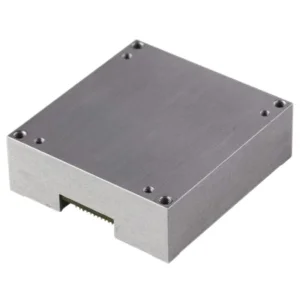
The heartbeat of any high-end stabilizer is its IMU. Our U16488-D module represents the pinnacle of inertial sensing. With 10-axis integration, it provides real-time motion compensation that allows gimbals to react within milliseconds to any vibration or tilt.
For OEM partners, integrating this high-precision module means offering products with unparalleled stability, even in high-wind conditions or during high-speed vehicle pursuits. This is why we are recognized among the top gimbal suppliers for industrial-grade navigation and motion control.
Future gimbals are moving toward "active intelligence." Modern ODM manufacturers are embedding AI chips directly into the stabilizer hardware. This allows for autonomous subject following, gesture control, and predictive movement, which is essential for solo creators and unmanned security patrols.
Using aerospace-grade carbon fiber and magnesium alloys, manufacturers are reducing weight while increasing payload capacity. This is vital for "Endurance Drones" where every gram of weight saved translates to more flight time.
Remote operation is the next frontier. Industrial gimbals now often feature 5G connectivity for real-time, low-latency data transmission, enabling experts in one country to control a gimbal-mounted camera in another for specialized site inspections.
From the bustling streets of Los Angeles film sets to the remote oil rigs in the North Sea, the procurement needs for gimbal stabilizers vary significantly:
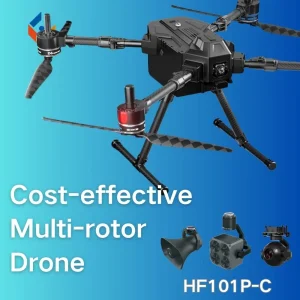
Gimbals are no longer just accessories; they are integrated components of sophisticated aerial systems. Our Advanced Modular Quadcopter utilizes dual-IMU safety protocols and a high-stability gimbal mount to ensure that inspection data is crystal clear, regardless of turbulence.
As a leading Chinese factory, we offer full ODM services to customize these gimbals for specific sensors, including multispectral cameras for agriculture or gas leak detectors for the energy sector.
China has become the global epicenter for gimbal stabilizer production for several strategic reasons:
The proximity to high-quality motor manufacturers, sensor developers, and PCBA factories in Shenzhen and surrounding areas allows us to move from prototype to mass production in record time.
Chinese manufacturers invest heavily in software development. Our stabilization algorithms are refined through millions of hours of flight and motion data, ensuring that our OEM clients receive world-class performance.
Economies of scale allow us to offer competitive pricing on high-end stabilizers. By optimizing the production process, we provide "Top 10" quality at a fraction of the cost of Western competitors, helping our global partners maximize their ROI.
In 1996, Aero Apex was established with hopes to help those who fly have a "nice and safe flight." That desire has only become stronger every year and so we have especially focused on importing quality aircraft parts and related articles.
Although we speak of "aircraft parts" lightly, a small four seater plane can be made up of more than 12,000 parts. Throughout the years, I have encountered a variety of aircrafts from those older than 50 years to the most up-to-date models and still find myself fascinated on a daily basis. The daily new discoveries help me never to lose my initial enthusiasm.
The years of experience gained from being in the industry has enabled me to give advice to customers who need it and also to learn from them as well. I hope to continue to work hard together with my customers, keeping the motto "do what you can today, today" at heart and work to improve the general aviation industry.
 Aero Apex