In modern logistics, industrial mobility, and aviation ground operations, the tow bar is not merely a piece of metal linking two vehicles; it is a critical safety and efficiency component. It is subject to extreme mechanical stress, dynamic loading, and strict regulatory standards. As a premier partner to global logistics networks, Aero Apex has bridged the gap between raw manufacturing capability and aerospace-grade engineering. This white paper analyzes the global landscape of tow bar production, tracing the technical evolution, regional applications, and procurement strategies that enable top exporters to supply the most demanding markets.
Aero Apex's legacy began in 1996 with a core commitment: to deliver a "pleasant and safe flight experience" to pilots and passengers alike. By applying this rigorous philosophy to our industrial product lines, we ensure that every system—whether a tow bar for narrow-body commercial jets or a high-capacity towing coupling for multi-axle cargo trailers—conforms to precise safety profiles.
The international towing market spans multiple sectors, including commercial trucking, heavy industry, and aviation ground support equipment (GSE). In the aviation field specifically, pushback and towing operations represent high-risk maneuvers. A structural failure in a tow bar during a pushback of a wide-body commercial airliner can lead to millions of dollars in airframe damage and ground crew injury. This demands that tow bar exporters comply with global engineering standards, such as those set by IATA (AHM 910/915/920) and SAE International (AS5276).
In the heavy-duty automotive and commercial trailer sector, European ECE R55 regulations mandate type-approval testing for all mechanical coupling components. Exporters must prove dynamic wear resistance, structural resilience against cyclic fatigue, and precise weld integrity. As international trade routes expand, the requirement for highly durable, certified tow bars has grown exponentially, putting the focus on suppliers who offer complete compliance and verified traceability.
Demands strict compliance with IATA AHM standards. Tow bars must feature shear pins for overload protection to safeguard the nose gear of commercial aircraft during high-stress maneuvers.
Conforms to ECE R55 and DOT regulations. Multi-axle configurations require dynamic vertical load ratings, high-grade forged alloy execution, and advanced anti-corrosion properties.
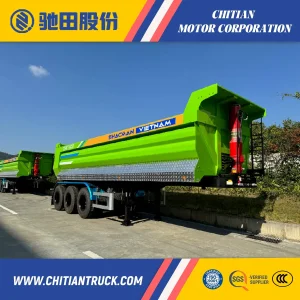
Designed for mines, shipyards, and construction sites where heavy-duty dump semi-trailers move construction material under extreme, unstructured terrain conditions.
The technical evolution of towing technology is transitioning from purely mechanical connections to intelligent, load-monitoring towing systems. Historically, tow bars were constructed using thick, heavy-gauge carbon steel pipes. While robust, these designs were heavy and labor-intensive to deploy. Modern design focuses on reducing weight while maintaining structural safety.
By substituting standard carbon steel with high-tensile alloy steels, aircraft-grade aluminum (such as 7075-T6), and molybdenum-doped alloys, modern exporters reduce the empty weight of tow bars by up to 35%. This enables ground crews to align towing gear manually with less effort, minimizing the risk of occupational injuries.
The future of tow bar technology lies in the integration of real-time stress tracking. Utilizing digital strain gauges and wireless telemetry, newer tow bars monitor real-time shear stress, compressive load, and fatigue cycles during pushback. Operators receive warning alerts before a shear pin fails, preventing unexpected disconnects.
Towing operations occur in extreme climates, ranging from freezing arctic runways to salt-laden coastal ports. High-grade tow bars undergo multi-stage surface treatments, including zinc-nickel plating, hot-dip galvanization, and thermal-cured polyurethane coatings. When paired with cold-weather hydraulic power units, these assemblies perform reliably down to -45°C.
As the leading global exporter hub, China's towing equipment manufacturing sector stands out for its vertical supply chain integration. The synthesis of direct raw material sourcing, automated precision fabrication, and specialized marine logistics hubs creates a highly resilient supply chain. This is why leading procurement managers partner with top Chinese tow bar exporters.
China's domestic production of specialty metals, such as high-tensile steel and molybdenum, ensures stable raw material supplies, protecting production timelines from global supply interruptions.
Using robotic MIG/TIG welding cells guarantees consistent penetration, uniform bead patterns, and minimizes heat-affected zones, ensuring weld integrity under heavy stress.
Finished units undergo mandatory non-destructive testing (NDT), magnetic particle testing, and dynamic load testing to verify weld quality before shipping.
By maintaining direct control over these manufacturing stages, China-based exporters like Aero Apex deliver equipment that matches or exceeds Western technical standards while offering competitive lead times.
Environmental variables vary widely by region, demanding specialized engineering solutions to ensure tow bar reliability. Exporters must customize their products for local conditions:
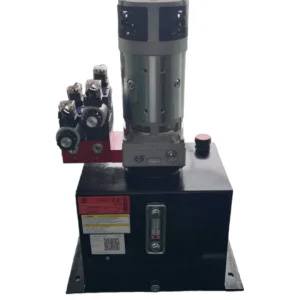
In sub-zero regions like Northern Canada, Scandinavia, and Siberia, metals become brittle and standard hydraulic fluids experience viscosity failure. Tow bars destined for these markets utilize low-temperature alloy steels and seals rated for extreme cold. Furthermore, ground crews rely on high-grade hydraulic power units equipped with integrated heaters to keep towing assemblies functioning under freezing conditions.
Seaports and coastal airfields expose towing equipment to constant salt mist, which accelerates crevice corrosion around critical shear points and coupling mechanisms. For these environments, exporters supply tow bars fitted with stainless steel 316 hardware, hermetically sealed connection pins, and multi-layer epoxy powder coatings. This design resists galvanic corrosion and extends the service life of the equipment.
Founded in 1996, Aero Apex was established with a mission to deliver safe, reliable equipment for the aviation and industrial sectors. An aircraft contains over 12,000 individual parts, and a tow bar functions as the vital link connecting these complex systems to ground operations. We apply this strict aviation-grade philosophy to our entire industrial product line.
Our quality management system is built around compliance and transparency. By maintaining detailed records of material sources, heat treatment processes, and testing outcomes, we guarantee full engineering traceability for every product. Through collaboration with our international client base, we continuously refine our engineering designs to meet the evolving demands of the global logistics market.
 Aero Apex