High-precision systems and heavy-duty hardware deployed across international logistics hubs and commercial aviation fleets.

An authoritative analysis of air cargo logistics, ramp operation metrics, and supply chain expansion worldwide.
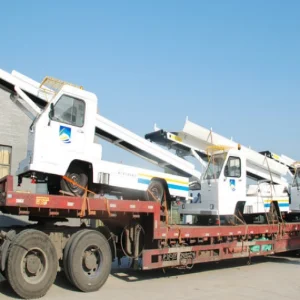
The global air cargo sector serves as the high-velocity backbone of international trade, transporting over 35% of global trade by value. At the core of this operational infrastructure are heavy-duty cargo loaders—specialized Ground Support Equipment (GSE) designed to transfer Unit Load Devices (ULDs), pallets, and bulk baggage between apron transports and aircraft lower decks or main decks. As belly-hold capacity expands on wide-body passenger jets and dedicated freighter fleets experience unprecedented demand, cargo loading technologies must maintain rigorous standards of safety, thermal stability, hydraulic efficiency, and zero-downtime reliability.
Selecting top cargo loader suppliers and exporters requires evaluating not just structural lifting limits, but full-stack system interoperability. Equipment must interface flawlessly with diverse aircraft profiles—from narrow-body Boeing 737 and Airbus A320 series to high-capacity maindeck freighters like the Boeing 777F and Airbus A350F. Advanced suppliers now integrate CAN-bus architecture, optical sensor arrays for automated aircraft alignment, and telemetry platforms that minimize human error during docking procedures.
"Operational efficiency on the apron directly correlates with turnaround time (TAT). Modern cargo loading systems represent an apex convergence of structural mechanics, electric drive hydraulics, and predictive telemetry designed to guarantee seamless payload transfers under extreme operational demands."
Engineering standards driving high-payload hydraulic elevation, power distribution, and structural integrity.
Transitioning from legacy diesel power units to 800V Lithium Iron Phosphate (LiFePO4) battery packs reduces carbon emissions on the tarmac while offering instant torque and lower maintenance costs over 10,000 operational hours.
Integrated ultrasonic distance sensors and 3D LIDAR collision-avoidance systems dynamically decelerate the loader upon approaching the fuselage, preventing costly airframe damage during loading sequences.
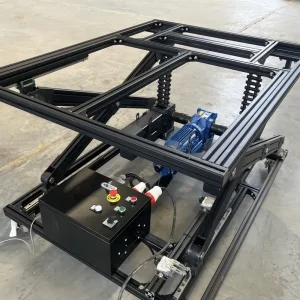
Heavy-duty, precision-engineered dual scissor lift mechanisms feature electro-hydraulic proportional valves to ensure ultra-smooth vertical movement, compensating for center-of-gravity shifts during heavy container transfers.
Ground handling operations demand specific configuration matrices tailored to fleet mix. Below is an engineering overview comparing primary operational parameters for industrial cargo loader classifications exported globally:
| Parameter | Lower Deck Container Loader (7.0 Ton) | Maindeck Heavy Loader (14.0 - 35.0 Ton) |
|---|---|---|
| Max Lifting Capacity | 7,000 kg (15,400 lbs) | 14,000 kg to 35,000 kg (30,800 - 77,000 lbs) |
| Transfer Height Range | 1780 mm - 3550 mm | 2100 mm - 5600 mm |
| Conveyor Speed Range | 0.3 m/s variable stepless | 0.18 - 0.25 m/s synchronized zone control |
| ULD Compatibility | AKE, AKH, LD1, LD2, LD3, P1P, P6P | P1P, P6P, PGA, 10ft/20ft/40ft Heavy Pallets |
| Safety Certifications | IATA AHM 910, 913, 930; CE Compliant | IATA AHM 910, 915, 931; ISO 3882; CE Marked |
Engineered to operate seamlessly across extreme thermal thresholds, high-humidity coastal hubs, and desert aprons.
For hubs operating in Northern Europe, Canada, and Alaska, cargo loaders feature low-viscosity synthetic hydraulic fluids, electric battery heating jackets, heated operator cabs, and specialized rubber tracks or studded tire assemblies for ice traction.
Deployments across the Middle East and North Africa require reinforced radiator cooling matrices, heavy-duty hydraulic fluid heat exchangers, and cyclone air pre-cleaners to defend internal combustion engines or power electronics from micro-abrasive sand ingress.
To combat saline oxidation at coastal mega-hubs, leading exporters utilize hot-dip galvanized chassis frames, stainless steel hydraulic lines, IP68-rated wiring harnesses, and multi-layer polyurethane marine coatings.
Decades of Commitment to Aviation Safety, Reliability, and Component Excellence
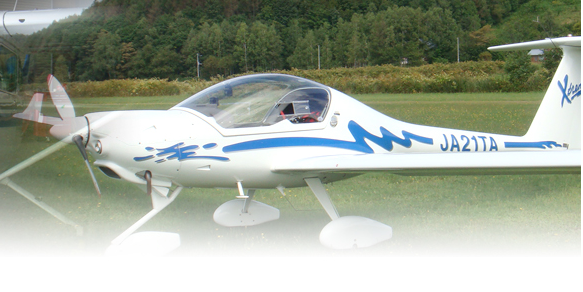
Founded in 1996, Aero Apex was established with a simple yet profound mission: to provide every pilot and passenger with a "pleasant and safe flight experience." Over the years, this commitment has only grown stronger, and as the aviation industry has evolved, so has our dedication to ensuring the highest standards of service and quality. Specifically, we have placed a strong focus on importing top-quality aircraft parts and related products, ensuring that every component we provide meets the highest safety and reliability standards.
While the term "aircraft parts" may seem straightforward, it is important to recognize the complexity behind it. For example, a small four-seater airplane consists of over 12,000 individual parts, each playing a crucial role in ensuring the safety and performance of the aircraft.
The continuous innovations within the aviation industry provide daily opportunities for discovery. Each new advancement keeps our enthusiasm alive and ensures that we remain deeply engaged with the field. This passion goes beyond the aircraft themselves; it is about understanding how aviation impacts the world, connecting people, and contributing to a safer and more efficient flying experience for all.
With years of experience in the industry, we are in a unique position to offer valuable advice to our customers while simultaneously learning from them. The exchange of knowledge and insights has been mutually beneficial, helping us stay at the forefront of the industry. We truly value the relationships we have built with our customers, and believe that through these interactions, we are able to help improve and elevate the general aviation industry as a whole.
Looking ahead, we remain committed to our core philosophy: "Do what you can today, today." This motto serves as a reminder to focus on the present, to take action, and to continually strive for progress. Together with our customers, we aim to work hard toward advancing the aviation industry and improving the safety, efficiency, and overall experience of air travel.
A unified supply ecosystem—combining structural framing, electronic displays, high-tensile lifting lugs, and intelligent conveyance chains.
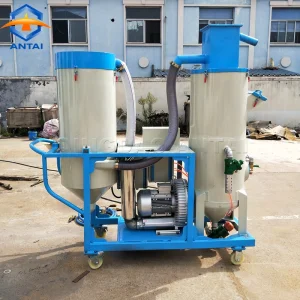
A cargo loader operates within a broader industrial matrix. Ground handling operations rely on precise sub-components to ensure zero structural failures. From heavy-duty chain elevators that transfer heavy container pallets inside logistics hubs, to IP68 waterproof data signal connectors (such as the Cnlinko LP20 series) that maintain CAN-bus signal telemetry between the loader's operator console and master PLC units, every component plays a mission-critical role.
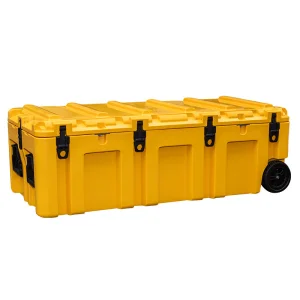
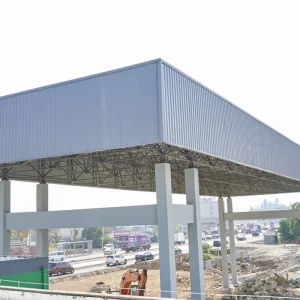
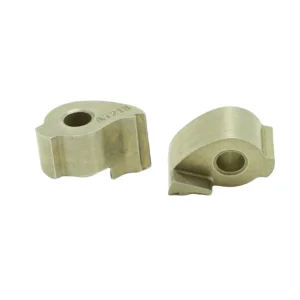
Furthermore, structural warehouse infrastructure, rotomolded protective tool cases for field service technicians, small precision powder metallurgy gears driving motor control boxes, and emergency safety equipment form an interconnected logistics framework. Leading exporters guarantee that every sub-assembly meets strict ISO standards, mitigating operational risk across all ground handling routines.
Expert technical insights regarding cargo loader procurement, maintenance compliance, and operational standards.
Explore our full range of aviation support components, structural hardware, and industrial technologies.


 Aero Apex