Aero Apex offers high-fidelity demonstration and empirical units designed for Dubai flight schools and universities. Below is our featured training line, specifically configured for Middle East academic integration.


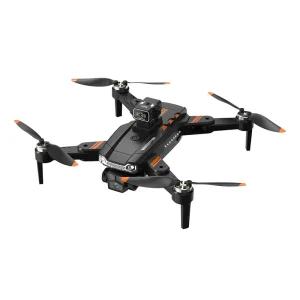
Dubai is accelerating its path to becoming the global epicentre of civil and logistics aviation. Driven by ambitious initiatives like Dubai Economic Agenda D33 and the ongoing expansion of Al Maktoum International Airport (DWC)—poised to become the world’s largest airport with an eventual capacity of over 260 million passengers—the region is undergoing an unprecedented infrastructure boom. Consequently, the local demand for advanced training methodologies has surged. From primary cadet certification courses at the Emirates Flight Training Academy (EFTA) to technical aerodynamics laboratories at the Higher Colleges of Technology, Dubai’s educational fabric requires top-tier, compliant flight training aids.
The Middle Eastern environmental context poses distinct operational profiles for avionics and aerodynamic structures. High ambient temperatures, seasonal airborne dust, and high salinity call for pilot precision and rigorous pre-flight safety practices. High-fidelity visual training aids, aerodynamic wind flow simulators, and structural models designed by manufacturers who understand EASA, FAA, and UAE General Civil Aviation Authority (GCAA) guidelines are essential. General aviation companies and cargo hubs in Dubai South are increasingly investing in proprietary simulation systems to streamline transition training for regional pilots.
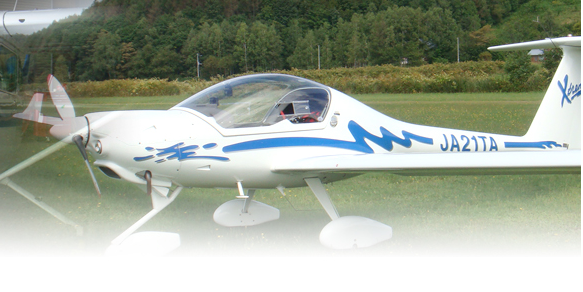
Founded in 1996, Aero Apex was established with a simple yet profound mission: to provide every pilot and passenger with a "pleasant and safe flight experience." Over the years, this commitment has only grown stronger, and as the aviation industry has evolved, so has our dedication to ensuring the highest standards of service and quality. Specifically, we have placed a strong focus on importing top-quality aircraft parts and related products, ensuring that every component we provide meets the highest safety and reliability standards.
While the term "aircraft parts" may seem straightforward, it is important to recognize the complexity behind it. For example, a small four-seater airplane consists of over 12,000 individual parts, each playing a crucial role in ensuring the safety and performance of the aircraft. This rigorous attention to structural integrity is what guides the development of our flight training aids.
The continuous innovations within the aviation industry provide daily opportunities for discovery. Each new advancement keeps our enthusiasm alive and ensures that we remain deeply engaged with the field. This passion goes beyond the aircraft themselves; it is about understanding how aviation impacts the world, connecting people, and contributing to a safer and more efficient flying experience for all.
With years of experience in the industry, we are in a unique position to offer valuable advice to our customers while simultaneously learning from them. The exchange of knowledge and insights has been mutually beneficial, helping us stay at the forefront of the industry. We truly value the relationships we have built with our customers, and believe that through these interactions, we are able to help improve and elevate the general aviation industry as a whole.
Looking ahead, we remain committed to our core philosophy: "Do what you can today, today." This motto serves as a reminder to focus on the present, to take action, and to continually strive for progress. Together with our customers, we aim to work hard toward advancing the aviation industry and improving the safety, efficiency, and overall experience of air travel.
Sourcing flight training aids at an enterprise scale involves navigating complex global compliance frameworks. Aviation training procurement teams face challenges such as maintaining supply chain traceability, reducing customs delays at Dubai hubs, and verifying component performance against real-world counterparts. Quality control is paramount; simulators and aerodynamic models must behave predictably to avoid negative training transfer, where cadets learn incorrect operational responses due to inaccurate equipment physics.
Every instrument and demonstration system must be backed by a transparent production trail. Procurement programs look for ISO 9001 certifications alongside component-level compliance (CE, FCC, RoHS) to guarantee physical reliability during intensive flight-school workloads.
Dubai's hot, humid climate requires specialized materials. Polymeric components and alloys used in mechanical devices must resist high temperatures, thermal cycling, and particulate entry without degrading over years of training cycles.
Modern flight schools demand training aids equipped with sensor arrays that capture performance data in real time, helping instructors track cadet progress, flight path accuracy, and muscle-memory acquisition.
Aero Apex bridges the gap between theoretical aerodynamics and hands-on cockpit operations by supplying flight training aids that meet diverse industrial requirements. Our portfolio targets three main areas of aviation education:
Understanding fluid dynamics is the foundation of piloting. Our Bernoulli's Principle teaching models and Vortex Ring apparatus allow flight instructors to visually demonstrate lift, drag, and air movement. These tools help cadets grasp critical concepts like wing stalling and wake turbulence before their first flight.
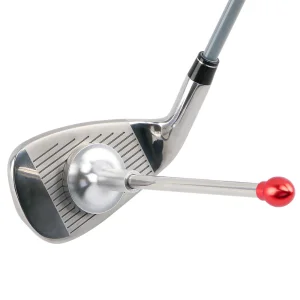
Accurate body alignment and spatial awareness are essential for flight safety. Utilizing technologies adapted from precision alignment platforms, our spatial training aids help pilots train their visual reference points and build muscle memory for pitch, roll, and yaw alignment during landing procedures.
Aero Apex continuously tracks emerging aviation technologies to keep our product line aligned with the future of flight training. Our roadmap focuses on integrating key digital advances:
Merging physical wind-flow models with AR overlays, allowing students to view virtual pressure zones directly on mechanical models.
Integrating machine learning algorithms into UAV and drone trainers to analyze cadet input and highlight micro-errors in path correction.
Expanding inflatable dome simulators to accommodate 360-degree high-definition flight projections for cost-effective multi-role training.
Explore our complete range of spatial alignment devices, security tools, and ground training systems designed to support both aviation cadets and operational ground crews.


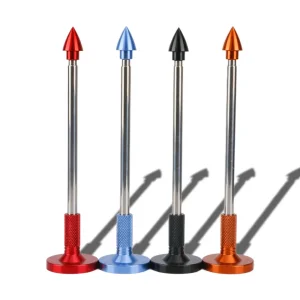
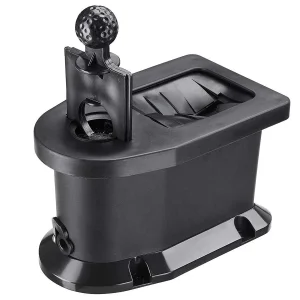
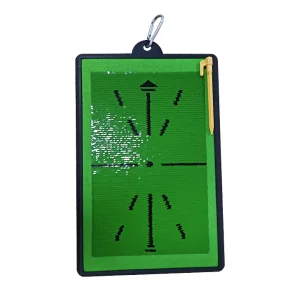
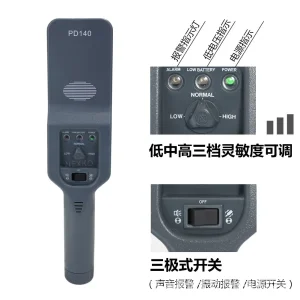

Deploying training equipment in the United Arab Emirates requires strict adherence to GCAA Civil Aviation Regulations (CARs) and compliance with international standards like EASA Part-FCL. Aero Apex ensures that all physical training aids, aerodynamic demonstrators, and ground control models meet these regulatory criteria.
We provide complete technical documentation, calibration certificates, and user manuals to support air safety management systems. Our regional distribution network ensures fast logistics and customs clearing via Jebel Ali or Dubai World Central. This localized support minimizes downtime and ensures replacement parts are readily available, keeping flight training programs running smoothly.
Find answers to common questions about sourcing, logistics, compliance, and customization for aviation training equipment in the Middle East.
 Aero Apex