The Course Deviation Indicator (CDI) remains a fundamental instrument in the cockpit of modern and legacy aircraft alike. Used primarily in VOR (VHF Omnidirectional Range) and ILS (Instrument Landing System) navigation, the CDI provides pilots with real-time lateral guidance relative to a selected course. In the current industrial landscape, the market is witnessing a transition from traditional analog mechanical instruments to integrated digital displays. However, the requirement for standalone, high-reliability CDIs remains critical for safety redundancy and general aviation (GA) retrofitting.
Parts in a Small Aircraft
Avionics Market CAGR
Years of Expertise
Precision Reliability
Recognized leaders in precision navigation and aerospace instrument manufacturing.
A global giant in GPS technology, Garmin has revolutionized the CDI market with digital indicators like the GI 275. Their products integrate seamlessly with modern flight decks, providing high-resolution interfaces and multi-function capabilities.
Known for their BendixKing brand, Honeywell has produced some of the most iconic CDI units in aviation history, such as the KI 209. They are synonymous with "Gold Standard" reliability in commercial and general aviation.
As a leader in advanced flight control systems, Collins provides high-end navigation instruments for commercial airliners and defense sectors. Their CDIs are engineered for extreme environments and high-precision requirements.
Pioneers in the experimental aircraft market, Dynon offers cost-effective, integrated CDI solutions within their SkyView electronic flight instrument systems, making advanced navigation accessible to hobbyists and light aircraft owners.
Aspen is famous for their Evolution Flight Display system, which reimagines the traditional CDI as a glass-cockpit primary flight display. They focus on retrofitting older cockpits with modern, reliable digital technology.
A master of precision, Mid-Continent produces both mechanical and digital CDIs. Their MD200 series is widely used as a standard replacement part due to its exceptional durability and TSO-certified quality.
Focusing on compact and clever avionics, Trig provides CDIs that are perfect for space-constrained cockpits. Their TI106 is a modern, lightweight indicator designed to work with a variety of VOR/LOC/Glideslope receivers.
Sandel specializes in Electronic Horizontal Situation Indicators (EHSI) that combine the functions of a CDI and a heading indicator into one bright, sunlight-readable display.
A rising star in the UAV and General Aviation world, uAvionix focuses on miniaturization. Their digital instruments provide CDI functionality in remarkably small form factors for the next generation of flight.
Leveraging decades of industrial manufacturing, Aero Apex has become a key exporter of high-precision components and custom navigation hardware solutions. Our focus on precision CNC machining and fiber-optic integration positions us as a top choice for OEM/ODM global procurement.
The aviation industry is moving rapidly toward Performance-Based Navigation (PBN). This shift means that CDIs must now handle data from multiple sources beyond ground-based VORs, including GPS/GNSS and SBAS (Space Based Augmentation Systems). Future CDIs will not just show deviation from a radial, but will provide predictive path guidance and vertical deviation for LPV (Localizer Performance with Vertical Guidance) approaches.
Procurement officers in the aerospace sector are looking for three things: TSO Certification, Long MTBF (Mean Time Between Failures), and Global Support. As the supply chain becomes more complex, there is a rising demand for manufacturers who can offer vertical integration—producing everything from the high-precision gears and timing pulleys to the final display assembly.
Aero Apex combines the efficiency of Chinese manufacturing with international safety standards, providing a unique value proposition for global exporters and aircraft maintainers.
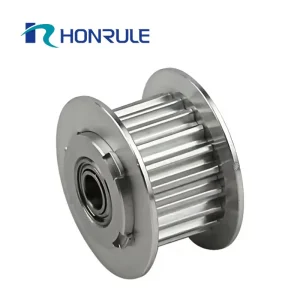
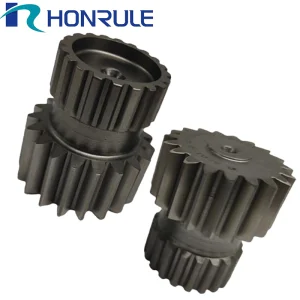
Our facility utilizes state-of-the-art CNC machining to produce internal CDI components, including synchronous timing pulleys and aluminum gear assemblies with micron-level tolerances.
Located in the heart of the global industrial hub, we ensure rapid prototyping and quick scaling for large-scale navigation system deployments.
Every navigation component undergoes environmental stress testing, vibration analysis, and signal integrity checks to meet the "pleasant and safe flight" mission.
Founded in 1996, Aero Apex was established with a simple yet profound mission: to provide every pilot and passenger with a "pleasant and safe flight experience." Over the years, this commitment has only grown stronger, and as the aviation industry has evolved, so has our dedication to ensuring the highest standards of service and quality.
Specifically, we have placed a strong focus on importing top-quality aircraft parts and related products, ensuring that every component we provide meets the highest safety and reliability standards. While the term "aircraft parts" may seem straightforward, it is important to recognize the complexity behind it. For example, a small four-seater airplane consists of over 12,000 individual parts, each playing a crucial role in ensuring the safety and performance of the aircraft.
With years of experience in the industry, we are in a unique position to offer valuable advice to our customers while simultaneously learning from them. The exchange of knowledge and insights has been mutually beneficial, helping us stay at the forefront of the industry. Looking ahead, we remain committed to our core philosophy: "Do what you can today, today."

Owners of legacy aircraft often require new CDI units that are compatible with modern GPS receivers like the GTN 650. Our components facilitate these upgrades without requiring a complete cockpit redesign.
In SAR missions, precise tracking of flight paths in poor visibility is mandatory. High-sensitivity CDIs ensure that pilots can maintain flight patterns with extreme accuracy.
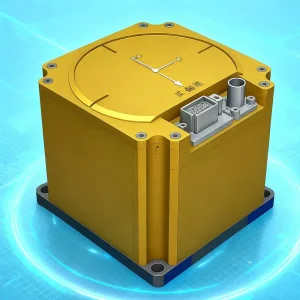
UAVs used for crop dusting and survey rely on Course Deviation logic to ensure uniform coverage. Our fiber-optic inertial navigation systems provide the backbone for these industrial applications.
Trainee pilots must master VOR and ILS navigation. Robust and easy-to-read CDI instruments are essential for flight school fleets to ensure a steep learning curve and high safety margins.
 Aero Apex